-
 On the way: Mirabello BayMirabello Gulf or Bay was named by the Venetians. That's why the name looks so Italian—because it is. It means "bay of wondrous beauty," and we had no quarrel to pick with that. We took pictures from Plátanos, on a high cliff across the bay from Ágios Nikólaos. On the far shore, which shows faintly in the picture, you can just see that city as a white blur about a third of the way across from the left.
 -
 Mirabello Bay #2This picture puts Ágios Nikólaos right in the middle of the far side of the bay.
 -
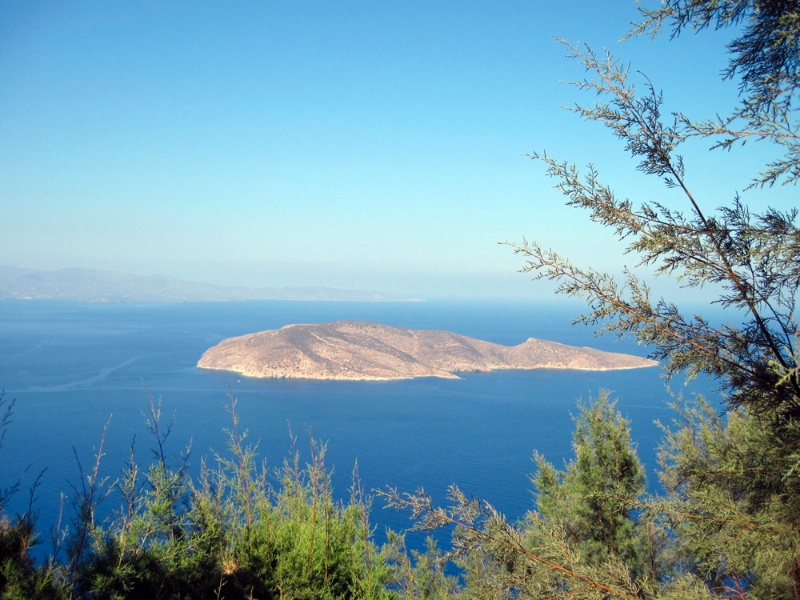 PsíraThis little island, below our viewpoint at Plátanos, was once home to a Minoan seaport, but the big tsunami that toppled all the palaces destroyed it around 1750 BCE. Later Psíra had a Roman lighthouse and a small military post, but now the island is without a source of fresh water, and no one lives on it.
 -
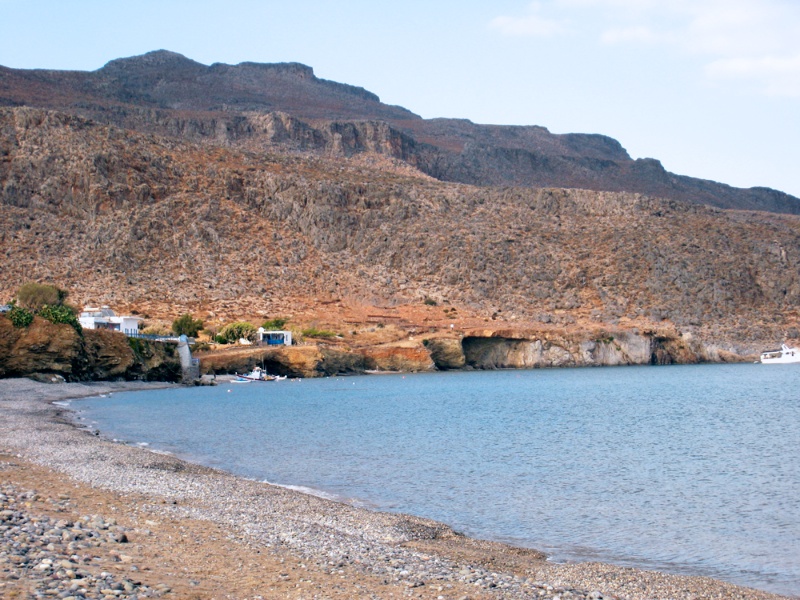 Beach view of Káto ZákrosThis was taken late in the day. The white structures at the left are the Akrogiáli tavérna and its attached lodgings, where we stayed.
 -
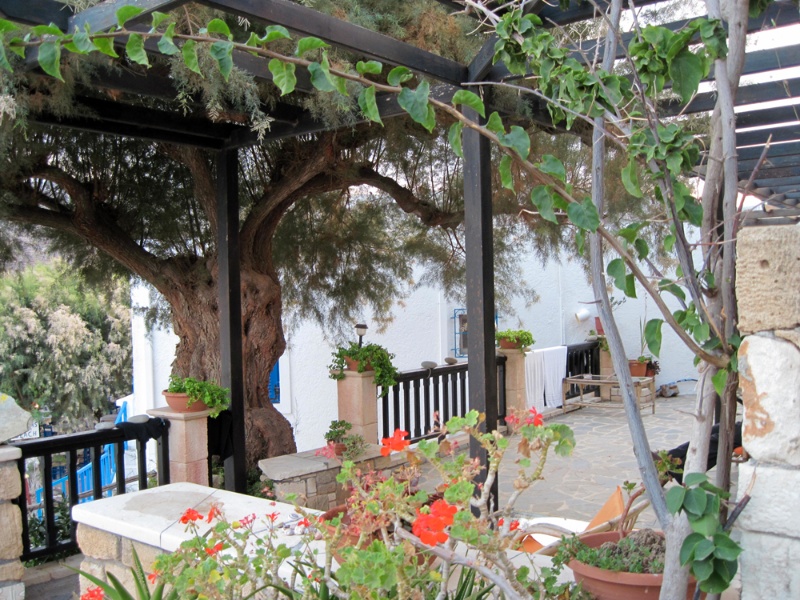 Coral Rooms terraceA comfortable, breezy place to sit and read. We shared it very peaceably with the occupants of the other rooms (never more than two other couples, and fortunately everyone enjoyed reading quietly).
 -
 ShadeThis tamarisk tree sheltered us sybaritic bookworms from the midday sun.
 -
 Tamarisk, up close and personalHere's a closer look at the flowering tamarisk branch that shed tiny petals on our pages (or rather, in our case, our screens).
 -
 Peaceful coexistenceHere are myself and a Swiss neighbor, thoughtfully not bothering each other. We did exchange friendly words, but everyone here was thoughtfully aware of the value of silence when people are reading.
 -
 A room with a viewAs you can see, our quarters were neither capacious nor elaborate, but right outside the Dutch door was our terrace, our tamarisk tree, and the Mediterranean (which was reflecting a good deal of light at the time this picture was taken).
 -
 A room without a viewIf our bedroom wasn’t luxurious, neither was our bathroom. But it had all the necessaries, and the threshold did a good job of keeping the water inside.
 -
 Stairs to the tavérnaLots of hotels have dining rooms on their lower floors, but outdoor dining rooms next to the water aren’t quite as common (though more so in Greece than the US).
 -
 Where the beach endsKáto Zákros’ beach is a short one, or else we’d probably never have come this close to the end of it. Up at this end, bands of sand alternate with bands of shingle, but the pebbles have a clear majority.
 -
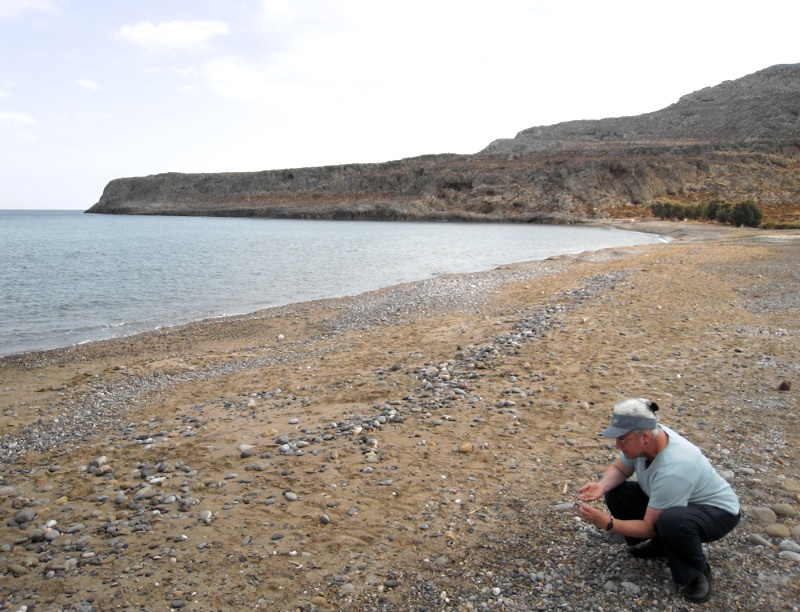 Picky pebble pickingWe couldn’t resist picking up a few pebbles to carry home. Dorothea was more discriminating than I was.
 -
 A rich assortmentThe beach at Káto Zákros has much to interest the true pebble afiçionado, as you can see.
 -
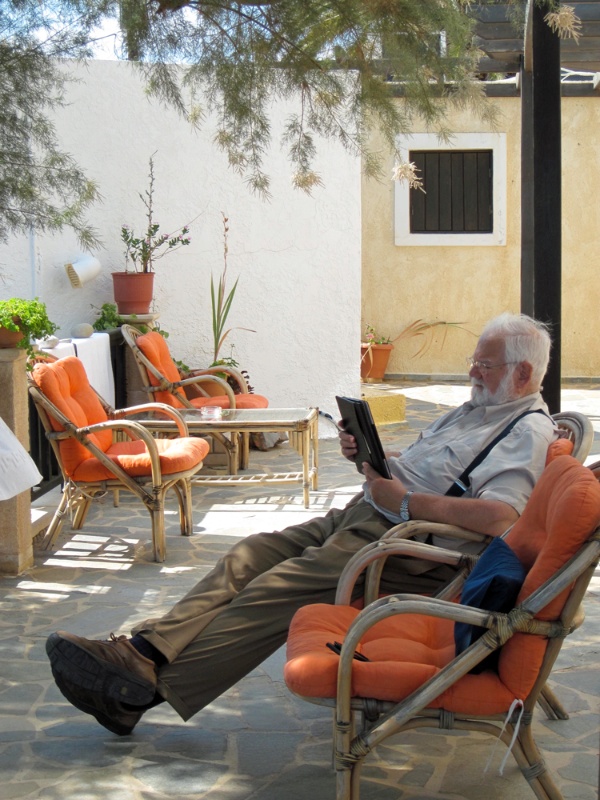 Man at workHere I am seen slaving over a hot iPad. Trollope was hard labor, but I didn't spare myself.
 -
 Dorothea's walk, #1While I was wearing myself out on Trollope, Dorothea took a walk, and as at Chóra Sfakíon she saw scenes that I missed. Here, she was looking at the beach from a position behind the Akrogiáli complex, which you can see just beyond where the boats are moored..
 -
 Dorothea's walk, #2I don’t know for certain that these modest vessels are the town’s only fishing fleet, but we certainly didn’t see any others around, so I suppose that one of them brought in the fish I consumed for dinner. I'll refrain from suggesting humorous connections between the small size of the fish and the small size of the boats, because if the fish are small it’s clearly because the Mediterranean has been fished to the point of exhaustion.
 -
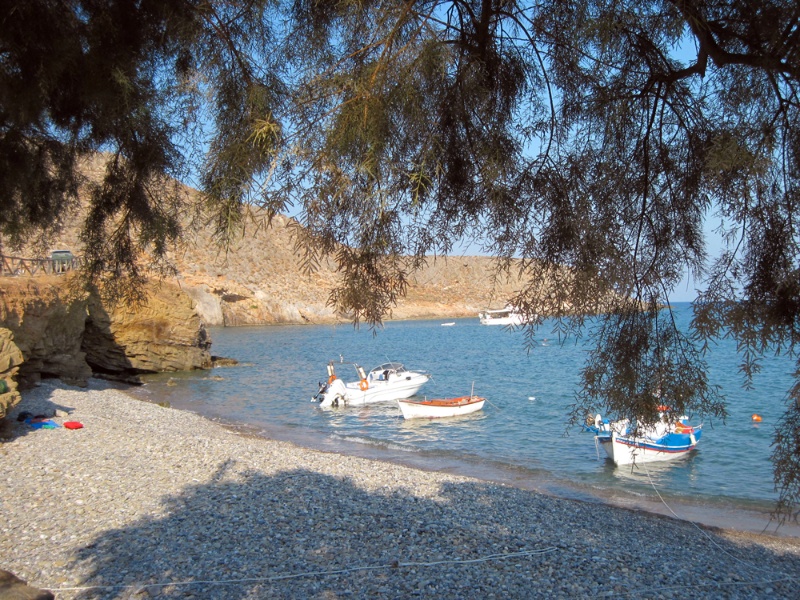 Dorothea's walk, #3Tamarisk trees like to grow near salt water, where they provide welcome shade. One of the tree’s names in English is “salt cedar,” and its Greek name, almíra, means ‘saltiness.’
 -
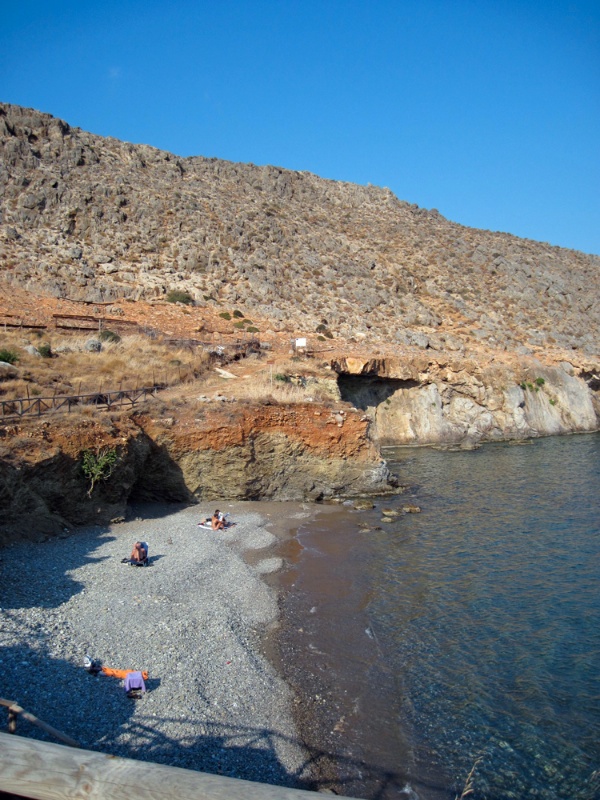 Dorothea's walk, #4This semi-secluded bit of beach is near the Akrogiáli; I think it’s where our Dutch neighbors liked to swim.
 -
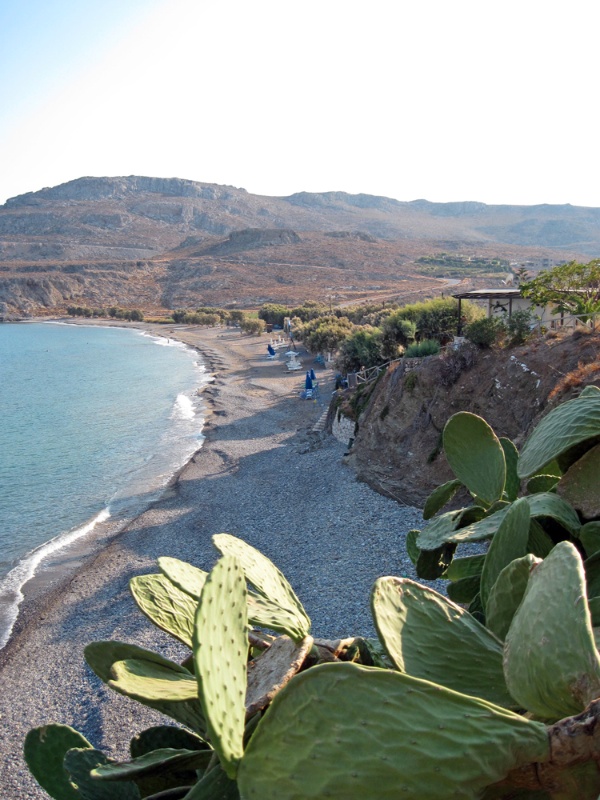 Dorothea's walk, #5Wikipedia tells me that prickly pear, like all cacti, is native to the Americas, but it has been introduced to many parts of the world, and grows all around the Mediterranean. In southern Greece in 1988, we saw donkeys happily devouring the leaves, seemingly unbothered by the sharp spines sticking out of them.
 -
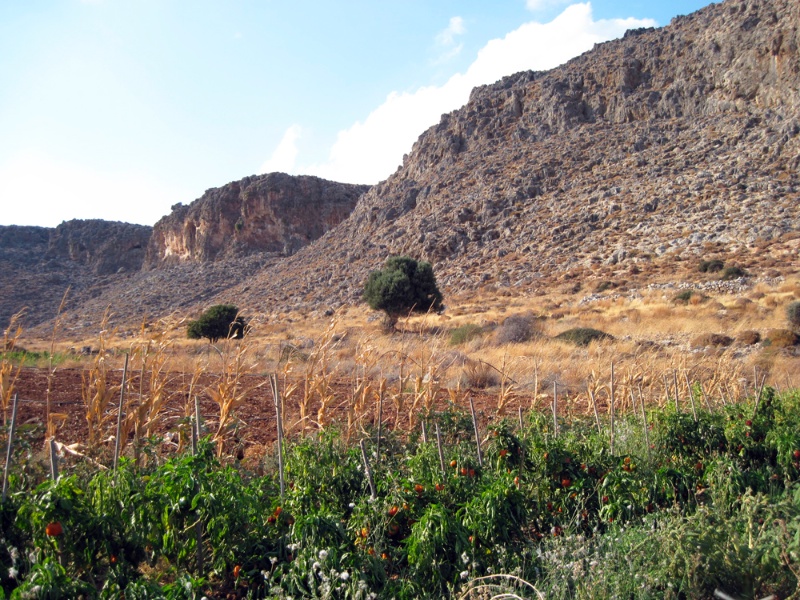 Dorothea's walk, #6Although Káto Zákros is obviously no big farming center, it is—like most of Crete that isn’t solid rock, a fine place to grow tomatoes and other veggies.
 -
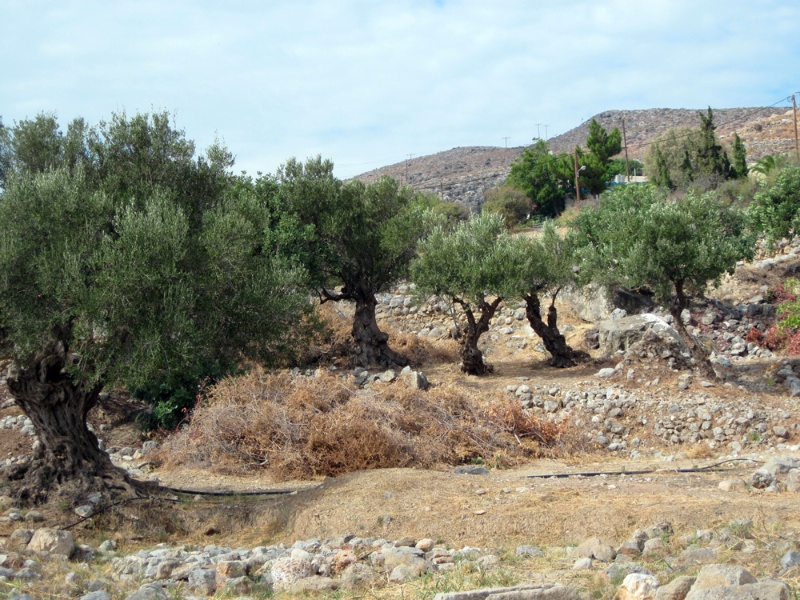 Olive treesDorothea took this picture the next day, while we were on our way to or from the palace site.
 -
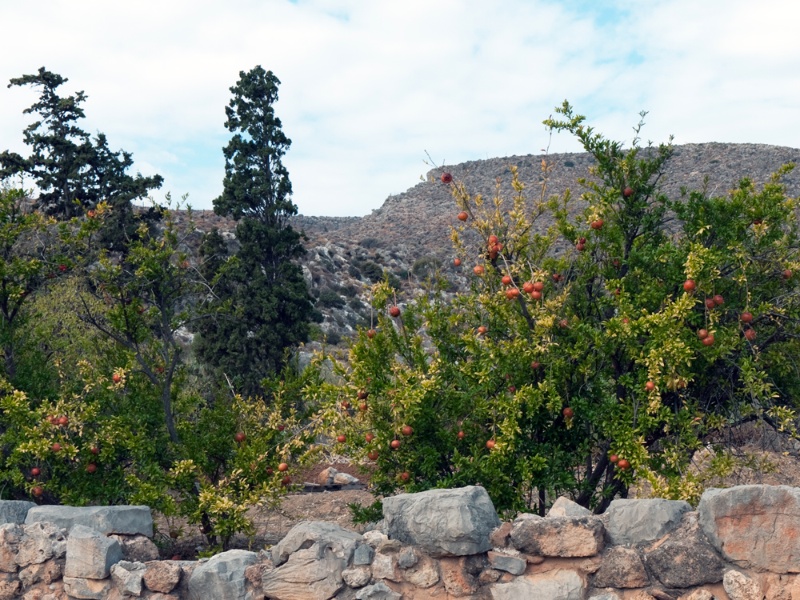 Pomegranates on the branchOn the same excursion, I noticed this pomegranate tree and was eager to add it to my life list. (Tree watching is easier than bird watching for those of us who don’t move very fast.)
 -
 Juvenile olivesThe guide books told us that it would soon be olive harvest time, but certainly not for these little guys—they‘re kindergartners at best. Dorothea snuck up on them to get this picture.
 -
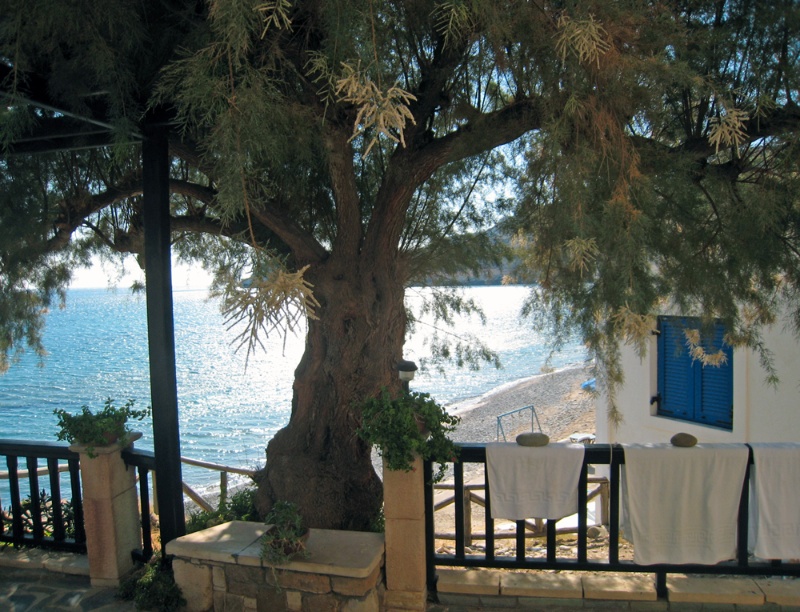 Terrace in the morningFor those who swam, like our neighbors in the next room, the railings were a good place to dry towels. Stones thoughtfully provided by the management kept the sea breezes from blowing them away.
 -
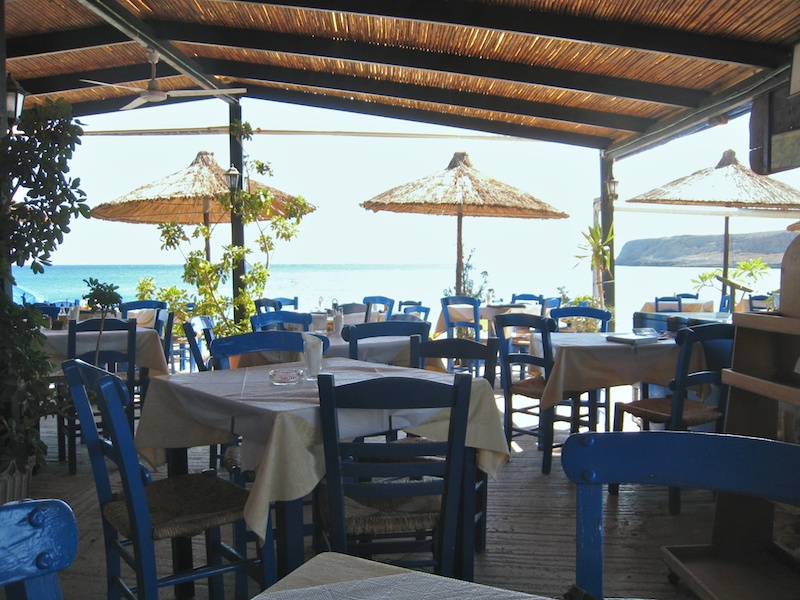 Akrogiáli dining roomThe outlying tables with umbrellas were great at dinner time, but when the sun was out almost everyone preferred the roof’s shade.
 -
 Níkos and companyDorothea took this on Saturday, shortly before we left. The young man hadn’t been there previously; he was probably weekend staff. The young woman had helped with the serving, but spent most of her time in the kitchen with her older colleague.